
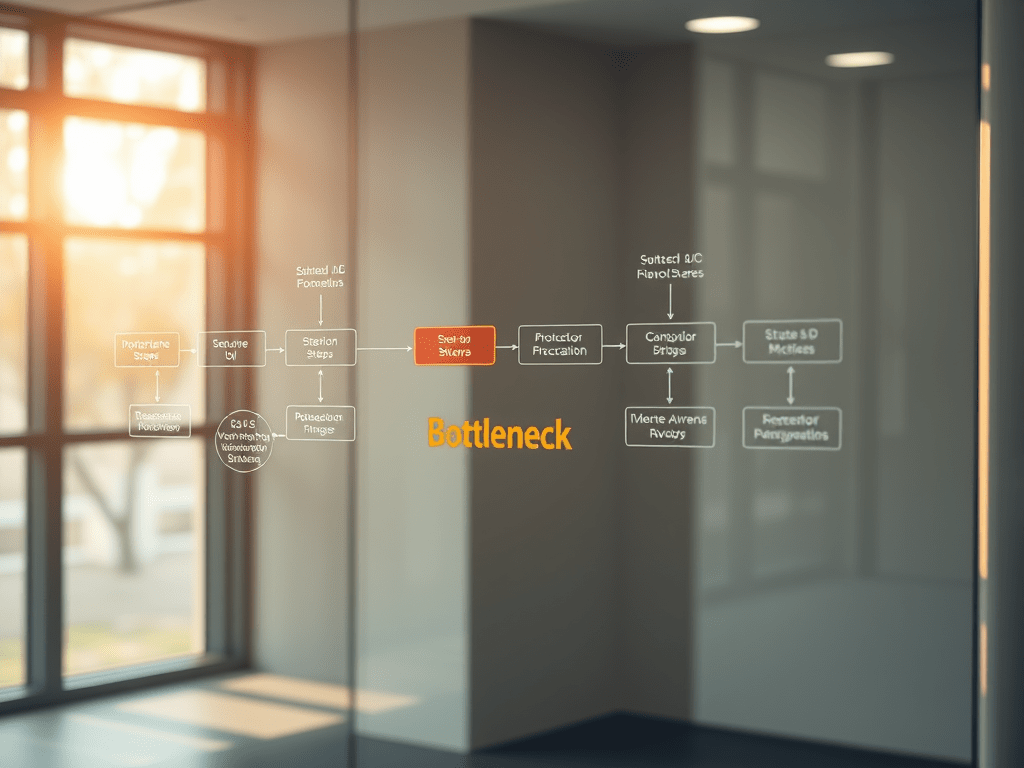
Operational bottlenecks can significantly hinder the growth and efficiency of small and medium-sized businesses (SMBs). These chokepoints slow down workflows, increase costs, and reduce overall productivity. In today’s fast-paced business environment, identifying and resolving bottlenecks is not just a necessity—it’s a competitive advantage.
By applying lean principles, workflow optimization strategies, and process improvement techniques, SMB leaders can eliminate inefficiencies and create a streamlined, agile operation. This article provides a deep dive into how to identify, analyze, and resolve operational bottlenecks, ensuring your business operates at peak performance.
Understanding Operational Bottlenecks

What is an Operational Bottleneck?
An operational bottleneck is a point of constraint in a business process where demand exceeds capacity, causing delays, inefficiencies, or increased costs. Bottlenecks can emerge in various areas—manufacturing, logistics, customer service, or administrative workflows—creating ripple effects throughout the organization.
For example:
- Manufacturing: A slow quality inspection stage causes products to pile up, delaying shipments.
- Customer Service: A high volume of support tickets overwhelms a small service team, leading to long response times.
- Supply Chain: A single vendor struggles to meet increased order demand, delaying production.
Types of Bottlenecks
- Short-Term Bottlenecks – Temporary constraints caused by sudden demand spikes, employee absences, or equipment failures.
- Long-Term Bottlenecks – Persistent inefficiencies embedded within workflows, such as outdated processes, staffing shortages, or capacity limitations.
The key to operational excellence is recognizing these bottlenecks before they escalate into critical failures. Combine this with an agile mindset to pivot and adapt even post failure.
Strategies to Identify Bottlenecks
Workflow Mapping and Value Stream Analysis
One of the most effective ways to spot bottlenecks is by mapping out your end-to-end workflow using Value Stream Mapping (VSM) or Process Flow Diagrams. These tools provide a visual representation of how tasks progress through a system, highlighting delays and inefficiencies.
How to implement:
- Document every step of a key process, from input to output.
- Identify stages where tasks pile up or take longer than expected.
- Measure lead time vs. cycle time (time from initiation to completion vs. actual work time) to detect inefficiencies.
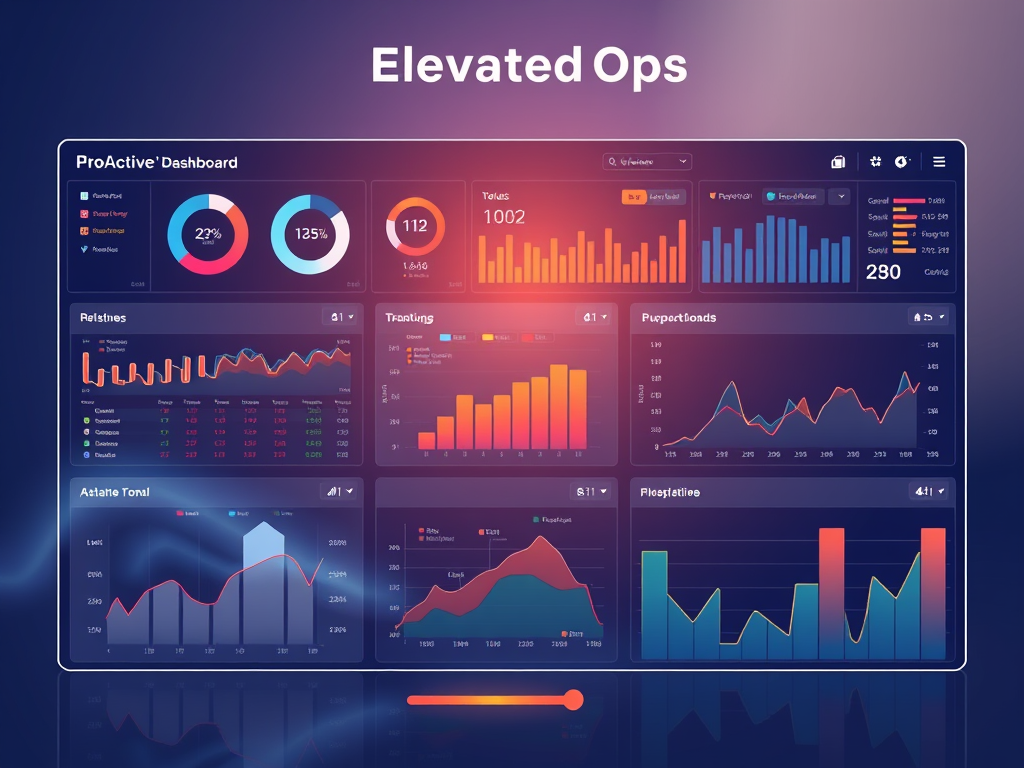
Monitor Key Performance Indicators (KPIs)
Tracking the right metrics can help pinpoint bottlenecks before they cause major disruptions. Key indicators include:
- Cycle Time: The time required to complete a process from start to finish.
- Throughput: The number of tasks, products, or services completed within a specific timeframe.
- Capacity Utilization: The percentage of total capacity being used—bottlenecks occur when certain areas operate at or near 100%.
- Wait Time: How long tasks, products, or customer requests remain in queue.
When any of these metrics deviate from expected norms, it’s time to investigate potential bottlenecks.
Employee Feedback and Observations
Employees on the front lines often have the best insights into workflow inefficiencies. Conduct regular:
- Gemba Walks (observing operations in real-time).
- Employee feedback sessions to identify recurring pain points.
- Anonymous process surveys to surface hidden inefficiencies.
Customer Experience and Complaint Analysis
Customer complaints can often reveal underlying operational bottlenecks. Are delays affecting order fulfillment? Are customers frustrated by long response times? Analyzing service tickets, reviews, and feedback trends can help pinpoint problem areas.

Approaches to Address Bottlenecks
Once identified, bottlenecks require strategic interventions to prevent long-term inefficiencies. Here’s how SMBs can address them effectively:
1. Process Optimization: Lean and Six Sigma Strategies
Lean principles focus on eliminating waste (Muda), inconsistency (Mura), and overload (Muri) in processes. Applying Lean and Six Sigma methodologies can help businesses streamline workflows and remove bottlenecks by:
- Reducing Non-Value-Added Activities: Identify steps in a process that do not add direct value to customers and eliminate them.
- Implementing the 5 Whys Technique: Dig into the root cause of bottlenecks by asking “Why?” repeatedly to uncover fundamental inefficiencies.
- Applying Kaizen (Continuous Improvement): Encourage incremental changes that lead to sustained efficiency improvements over time.
2. Workload Balancing and Resource Allocation
Bottlenecks often occur when resources are unevenly distributed. To mitigate this:
- Cross-train employees to handle multiple roles, reducing dependency on a single function.
- Redistribute tasks to balance workloads across departments.
- Automate repetitive tasks to free up human resources for higher-value work.
3. Capacity Expansion and Automation
For bottlenecks caused by limited capacity, consider:
- Upgrading equipment or software to speed up processing times.
- Outsourcing non-core activities to alleviate internal pressure.
- Automating manual processes (e.g., using AI chatbots in customer service, ERP systems for inventory management).
4. Cross-Functional Collaboration and Communication
Bottlenecks rarely exist in isolation—improving collaboration between departments ensures smoother workflows. Implement:
- Regularly address cross-functional inefficiencies (e.g., meetings if they are effective for collaboration in your environment).
- Standardized communication channels (e.g., project management tools like Asana or Monday.com).
- Shared dashboards for real-time performance tracking across teams.
5. Continuous Monitoring and Adaptation
Eliminating a bottleneck does not mean the job is done—new constraints will emerge as business conditions change. Develop a system of ongoing performance reviews and iterative process improvements to ensure long-term efficiency.
Best practices include:
- Establishing a Continuous Improvement Team to monitor operational effectiveness.
- Using predictive analytics to identify future capacity constraints.
- Conducting quarterly workflow audits to catch inefficiencies early.
Leverage Constraints
Operational bottlenecks can cripple efficiency, increase costs, and frustrate customers—but they are not inevitable. By identifying constraints, leveraging lean methodologies, optimizing processes, and fostering a culture of continuous improvement, SMBs can achieve sustainable operational excellence.
The key takeaway? Operational bottlenecks are not just problems to fix—they are opportunities to optimize. By systematically addressing these issues, SMBs can create agile, resilient businesses that thrive in competitive markets.
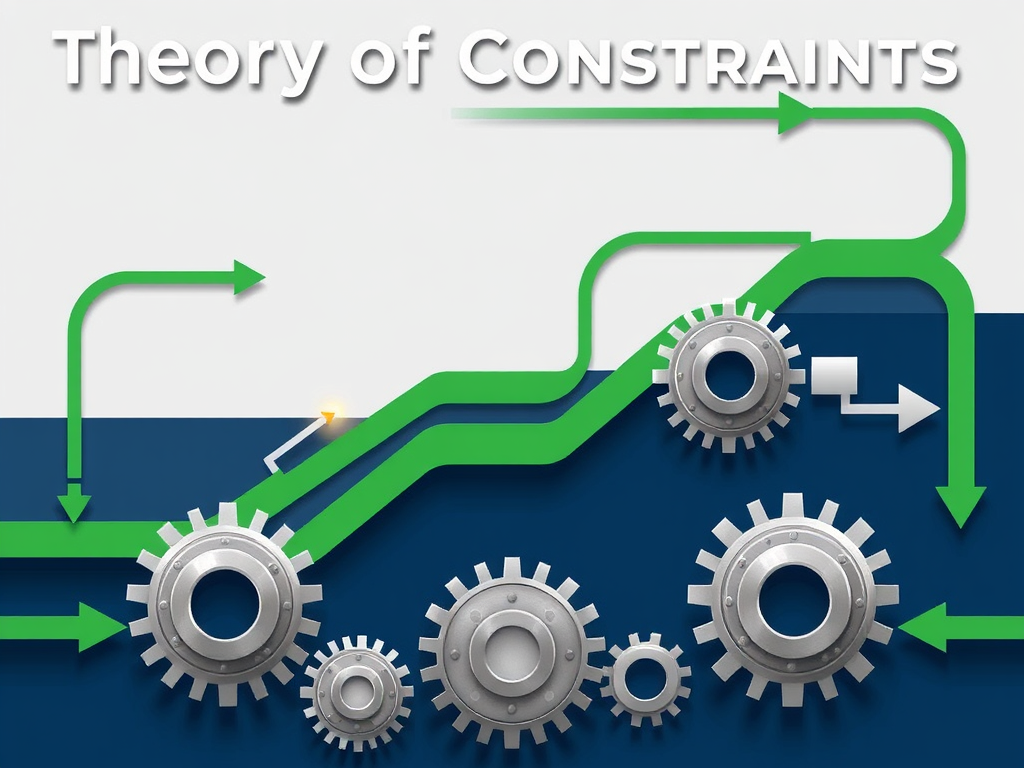
My understanding of bottlenecks—and operational efficiency as a whole—was profoundly enhanced by The Goal: A Process of Ongoing Improvement by Eliyahu M. Goldratt. This seminal work on the Theory of Constraints (TOC) challenges conventional thinking and underscores the critical role bottlenecks play in determining overall performance.
One of many powerful quotes from the book states, “What you have learned is that the capacity of the plant is equal to the capacity of its bottlenecks.” In other words, an operation will never be more efficient than its greatest constraint—making the identification and management of bottlenecks a strategic imperative. If you’re looking for a transformational approach to operational improvement, I highly recommend reading (or listening to the audiobook of) The Goal for a deeper exploration of these principles.
Next week, we’ll shift our focus from optimizing workflows to measuring success. In Metrics That Matter: Measuring Operational Success, we’ll explore the key performance indicators (KPIs) that provide actionable insights into efficiency, productivity, and overall operational health. Stay tuned to learn how to track the right metrics and drive continuous improvement.
 ElevatedOps Consulting, LLC